Now available in Singapore
Sleep cooler.
Wake up lighter.
The Melara ergonomic contour pillow cradles your head, neck and shoulders in any sleeping position — with breathable, cooling memory foam made for warm, humid nights.
- Cooling cover
- Non-allergic
- Washable cover
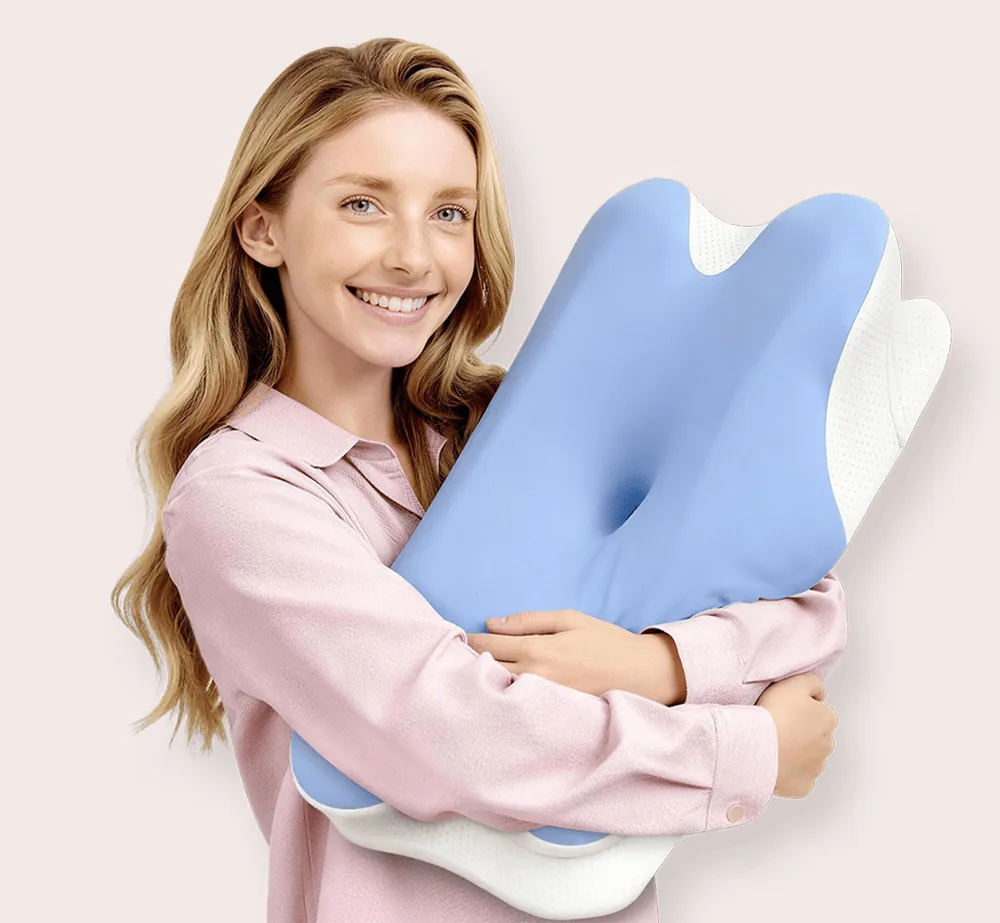
Support in any position
Raised side wings and a centre cradle adapt as you move between back, side and stomach.
Cooling comfort
A breathable cover and ventilated foam help release heat on humid Singapore nights.
Hypoallergenic
Dust-resistant, non-allergic materials with a removable, washable outer cover.
Breathable design
Pin-hole ventilation lets air flow through the foam instead of trapping warmth.
Slow-rebound memory foam
Moulds gently to your shape, then returns to form — no flattening, no daily fluffing.
Why good sleep is harder than it should be in Singapore
Singapore is a city that never really slows down. Long working hours, early commutes on the MRT, late-night hawker dinners and screens that follow us all the way to bed mean that many of us are getting less rest than our bodies need. Add the tropical climate — warm temperatures and high humidity all year round — and it is no surprise that so many people wake up feeling stiff, sweaty or simply not refreshed.
We often blame the mattress, the air-conditioning or stress, but one of the most overlooked parts of a healthy sleep routine is the pillow. Your pillow supports the weight of your head for six to eight hours every night. If it is too flat, too high, too soft or too warm, your neck and shoulders spend the whole night compensating. Over time that can show up as morning tension, restless tossing and turning, and a general feeling that you never quite reached deep sleep.
The Melara Pillow was designed to solve exactly these problems. Instead of a simple rectangle of fibre that slowly goes flat, Melara uses a carefully contoured shape made from slow-rebound memory foam, wrapped in a breathable cooling cover. The goal is simple: keep your head, neck and spine in a more natural line, keep you cooler, and help you wake up feeling better prepared for the day.
What is the Melara Pillow?
The Melara Pillow is an ergonomic contour pillow — sometimes called a cervical or orthopaedic-style pillow — with a distinctive butterfly-like shape. Each area of the pillow has a job. The centre has a gentle hollow that cradles the back of your head when you lie face up. The raised edges along the front support the natural curve of your neck. The higher side wings fill the space between your shoulder and your ear when you turn on your side. And the cut-outs at the corners give your arms and shoulders somewhere comfortable to rest instead of being pushed upward.
Because all of these zones are built into a single piece of memory foam, the pillow supports you as you change position during the night. You do not need to wake up and rearrange anything; you simply roll, and a different part of the pillow takes over.
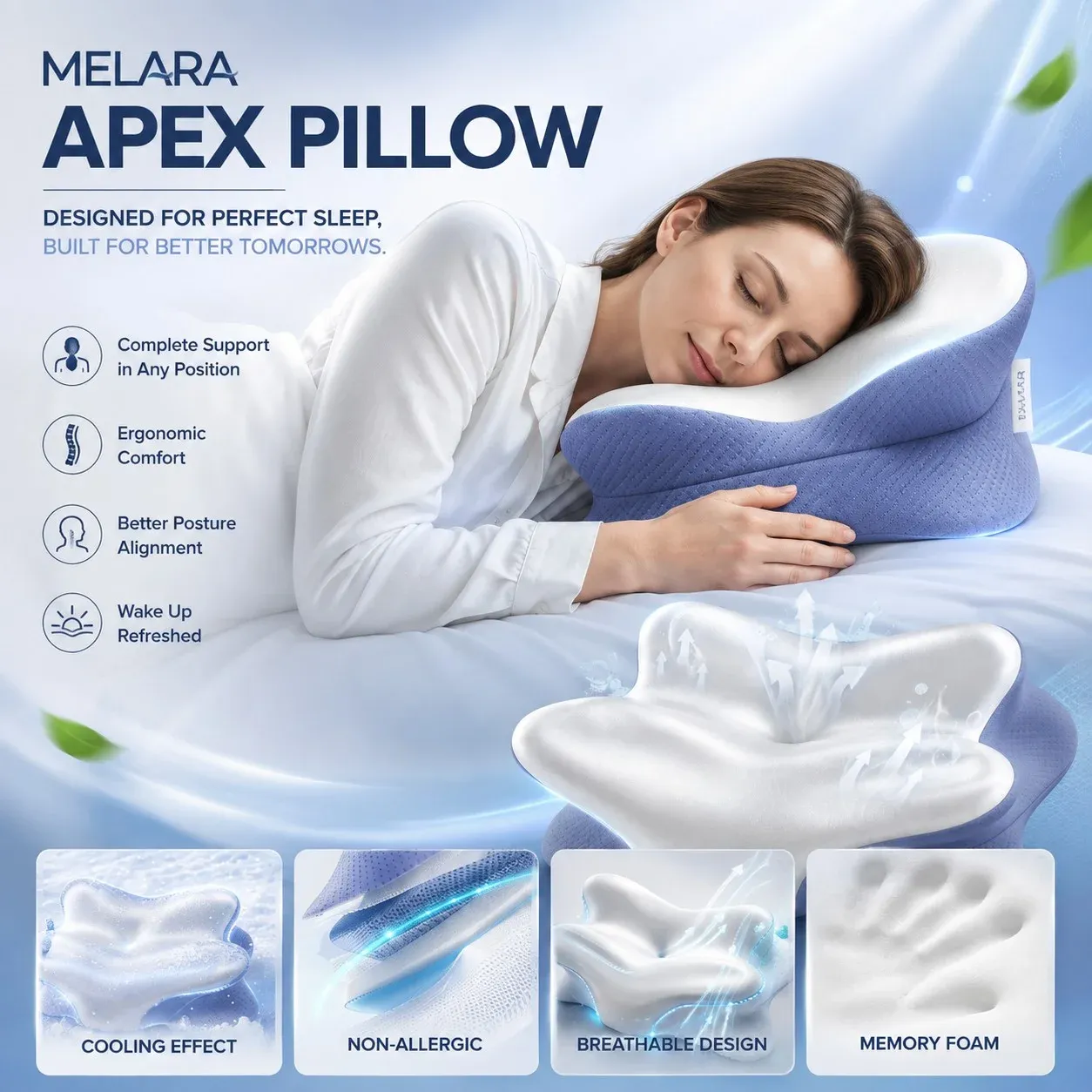
Designed for perfect sleep, built for better tomorrows
Every detail of the Melara Pillow is aimed at one thing: comfortable, uninterrupted rest. Here is what makes it different from an ordinary pillow you might pick up at a department store.
- Ergonomic contour shape that follows the natural curve of the cervical spine.
- Premium slow-rebound memory foam that responds to body heat and pressure.
- Cooling, breathable outer cover that feels fresh to the touch.
- Ventilation holes throughout the foam for steady airflow.
- Non-allergic, dust-resistant materials suitable for sensitive sleepers.
- Removable, washable cover for easy hygiene.
How the Melara Pillow supports your body
When you lie down, your spine should ideally stay in roughly the same alignment it has when you stand with good posture. A pillow that is too high bends your neck forward or sideways; a pillow that is too low lets your head drop. Either way, the small muscles around your neck and upper back have to work all night instead of relaxing.
Melara’s memory foam reacts to the warmth and weight of your head. It softens slightly where you press into it and stays firmer where you need support, so the pillow spreads pressure across a wider area. This is why memory foam pillows often feel like they are “hugging” you. At the same time, the slow-rebound foam does not collapse the way cotton or polyester fibre does, so the support you feel at midnight is the same support you feel at six in the morning.
For back sleepers
Rest your head in the centre hollow. The foam cradles the back of your skull while the raised front edge fills the curve under your neck, encouraging a neutral position that does not push your chin towards your chest.
For side sleepers
Turn towards one of the higher side wings. The extra height fills the gap created by your shoulder, keeping your head level with your spine. The shoulder cut-outs reduce the pressure that often causes numb arms or sore shoulders in the morning.
For stomach and combination sleepers
Stomach sleepers usually need a lower profile, so the softer, lower zones of the pillow are a better match. If you change positions several times a night, Melara’s multi-zone design lets you move naturally without losing support.
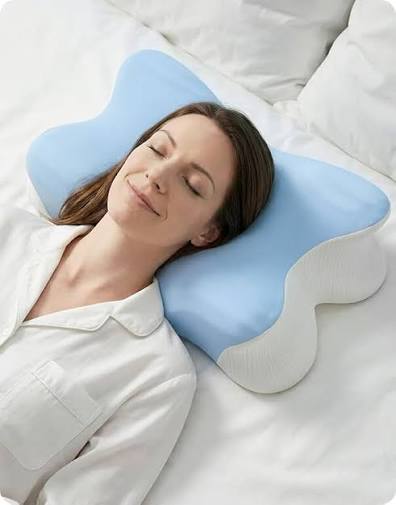
Made for tropical nights
Traditional memory foam has a reputation for sleeping warm, which is a real concern when the overnight temperature in Singapore rarely dips far below 25°C. Melara tackles this with three layers of thinking. First, the outer cover uses a smooth, breathable fabric that feels cool against the skin. Second, the foam core is perforated with ventilation holes so warm air can escape rather than building up under your head. Third, the contoured shape itself leaves channels for airflow around your neck and shoulders.
The result is a pillow that stays fresher for longer — whether you sleep with the air-con on all night, rely on a ceiling fan, or switch between the two. And because the cover is removable and washable, it is easy to keep clean in a humid environment where sweat and dust mites can otherwise become a problem.
Signs it is time to replace your pillow
Many people keep the same pillow for years without realising how much it has changed. Sleep experts commonly suggest replacing a standard pillow every one to two years, but the clearest guide is how it feels and how you feel. Watch out for these warning signs:
- You fold the pillow in half or stack two pillows just to get enough height.
- There are visible lumps, flat spots or yellow stains on the filling.
- You regularly wake up with a sore neck, tight shoulders or a headache.
- You toss and turn trying to find a comfortable position.
- Your nose feels blocked or itchy in the morning, which can be a sign of dust build-up.
- You wake up hot and have to flip the pillow to find the cool side.
If two or more of these sound familiar, your pillow is probably no longer giving you the support you need. Switching to a supportive design is a simple, low-effort way to make your nights more comfortable.
What makes Melara a smart choice
There are many contour pillows on the market, and they are not all equal. Some are so firm they feel like a block of wood; others are so soft they lose their shape after a few weeks. Melara aims for a balanced middle ground: supportive enough to hold your neck in place, yet soft enough to feel welcoming the moment you lie down. Its multi-zone design means one pillow can work for the whole household, whether your partner sleeps on their back and you sleep on your side. And because the cover can be removed and washed, it is practical for busy Singapore households where convenience matters as much as comfort.
Melara vs. a traditional pillow
Most people in Singapore still sleep on a standard fibre or down-alternative pillow. These are soft and familiar, but they have some well-known drawbacks. The filling shifts and clumps, so you find yourself folding or punching the pillow to get comfortable. Within months they often go flat, and the support you had on day one disappears. They also tend to trap heat and absorb moisture, which is not ideal in a tropical climate.
A contour memory foam pillow like Melara takes a different approach. The shape is fixed, so it does not depend on how well you fluffed it before bed. The foam keeps its form over long periods of use. And the ergonomic zones are designed around the human body rather than around a simple rectangle. For many sleepers, that difference is noticeable within the first week.
Who is the Melara Pillow for?
- Office workers who spend long hours at a desk and often wake with a stiff neck.
- Side sleepers whose current pillow is too flat to keep their head level.
- People who feel hot at night and want a more breathable sleep surface.
- Anyone with sensitive skin or dust allergies looking for a non-allergic pillow.
- Parents, shift workers and students who need to make every hour of sleep count.
- Anyone shopping for a thoughtful, practical gift for family members.
Tips for getting the best from your Melara Pillow
Give it time. If you have used a soft pillow for years, any supportive pillow can feel different at first. Allow a few nights to two weeks for your neck and shoulders to adjust.
Let it breathe after unboxing. Memory foam is often vacuum-packed for delivery. Remove the packaging and leave the pillow in a well-ventilated room for 24 to 48 hours so it can fully expand and any new-product smell can fade.
Position it correctly. The lower edge should sit closest to your shoulders, with your neck resting on the raised curve. Your shoulders should be on the mattress, not on the pillow.
Keep it clean. Wash the cover regularly on a gentle cycle and let it air-dry. Never put the foam core in the washing machine or dryer; instead, spot clean with a damp cloth and let it dry fully.
Build a routine around it. A great pillow works best alongside good habits: a consistent bedtime, a cool and dark bedroom, less screen time before bed, and avoiding heavy meals or caffeine late in the evening.
A better bedtime routine for busy Singapore lives
Many Singaporeans juggle demanding jobs, family responsibilities and long commutes, which makes good sleep feel like a luxury. A few simple habits can help your new pillow do its job even better. Try to go to bed and wake up at the same time every day, including weekends, so your body clock stays steady. Set your air-conditioner to a comfortable temperature, or use a timer so the room stays cool as you fall asleep without becoming too cold before dawn. Keep your bedroom dark with blackout curtains, which is especially helpful if you live in an HDB block with bright corridor or street lights.
Put your phone away at least thirty minutes before bed, and swap late-night scrolling for reading, light stretching or a warm shower. Limit kopi and teh in the late afternoon, since caffeine can stay in your system for hours. Finally, treat your bed as a place for rest: when your mattress, pillow and bedroom all work together, falling asleep becomes far easier and waking up feels much less of a struggle.
A small change with a big difference
You spend roughly a third of your life asleep. Upgrading the one item that supports your head and neck for all of those hours is one of the simplest changes you can make for your everyday comfort. The Melara Pillow combines thoughtful ergonomic design, cooling materials and easy care in a single product built for modern life in Singapore.
Ready to try it for yourself? Visit the official order page to see the latest price, any current promotions and delivery information for Singapore addresses.
Frequently asked questions
Your best sleep starts tonight
Join sleepers across Singapore who have switched to ergonomic, cooling support.
Individual results may vary. The Melara Pillow is a comfort product and is not a medical device.